"Running a marathon is almost like writing a book": Marco Salami explains how to arrive prepared and enjoy every moment
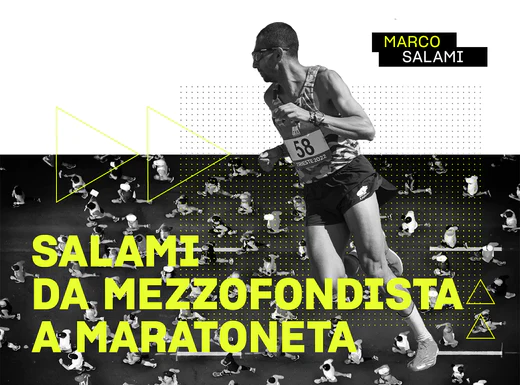
At 13, his first cross-country race, at 18 his first national titles, and at 19 his debut as a professional athlete at the Army Sports Center, where he now also coaches: Marco Najibe Salami’s story is one of visceral passion for athletics, born at a very young age, cultivated through a career as a middle-distance runner and steeplechaser, and reinvented now, at 36, with his marathon debut (fourth place overall and second in his category at the 2021 Venice Marathon). A life of milestones, victories, and hard training.
To the FLOKY Community, he reveals all his secrets for preparing for a marathon, enjoying every kilometer in training and racing, and never giving up.
How did it feel when you crossed your first finish line?
They say “where there’s a will, there’s a way.” This was especially true for me when I won the competition that led me to become a professional athlete. At the time, I was working as a clerk. It was March, almost April, and it was starting to get hot, and I couldn’t train during my usual lunch break. I wanted to participate in a national championship, so I asked my boss for 20 days off to go train in the mountains. I took part in the competition, won the title, and turned professional. It was a great victory: from a worker, I became an “athletics worker.”
You recently debuted in the marathon. Why did you make this change after a career as a middle-distance runner?
I almost quit, I thought I was done: I had a bad injury and, at 36, my career was almost over. I was starting to coach some young army athletes. Then I met Piero Incalza, an athletic trainer, who told me he thought I still had something to offer. I started training again and started to go strong again. I threw myself into the marathon because I wanted to prove I was a versatile athlete, capable of running fast both in the 800 meters and the marathon: with my debut in Venice, I can say I proved it. And I had FLOKY socks with me! I wore them for the first time in a race, without having ever tried them in training. Crazy! But after 42 km, I didn’t get any blisters, I couldn’t feel the seams, and I didn’t have any burns under my feet. A miracle! I fell in love with them; it felt like I had support in my shoe. A sock is just a sock, but FLOKY keeps my foot more stable and in position.
What does your typical training day look like?
I run 200 km a week, split between morning and afternoon. In Kenya, where I went to train for the Venice Marathon, I’ve run as much as 210-220 km, on dirt roads, ups and downs, long stretches, hills, and rocks, up to 2,400 meters above sea level. I went to Kenya specifically to seek out challenging conditions that would allow me, once home, to focus on achieving the best possible performance. FLOKY socks give me great support, both in races and in training, especially when my legs are tired, when I’m feeling weak, or when my tendons hurt. We marathon runners have tons of pain, and FLOKY helps me a lot with that. I use them all the time, precisely because they provide relief: they relieve my tendons and muscles, saving me from having to use a roller for hours or go to a physiotherapist every day. When a race is approaching and I need to start unwinding, that is, dropping to 150 km per week, I use the Run Up Long or Short, also for post-workout recovery. During the race, I switch to the Run Up Medium.
In a race, especially a long one like a marathon, how do you overcome critical moments?
Running a marathon is tough. In the months leading up to the Venice race, my coach put me under incredible mental stress: he created uncomfortable conditions during training. For example, if I ran 30 km, one kilometer was on sand and one on asphalt. Or at kilometer 22, he’d make sure a bicycle cut me off. Or he’d put a slightly stronger runner in front of me to make me nervous. The first few times, I’d get angry, I’d arrive exhausted, but that’s training too. During a race, for example, a distracted volunteer with a flag might make you take the wrong path, or the runner in front of you might drop your water bottle: in those situations, you have to stay calm; you can’t afford to get nervous. You have to find a solution to get out of it as best as possible. And you prepare for this in training.
And what’s your favorite moment?
As a kid, I suffered a lot during the race: the week before, like a college exam, I would freak out, forget about my training, lose confidence, and think I wasn’t ready. Now, as a mature athlete, the race is the moment I enjoy the most. I’m aware of the work I’ve done and I have confidence in myself: once I get there, I don’t get overwhelmed by emotion, I stay rational, and I know I’m ready. In a marathon, a thousand things can happen, and you can’t keep everything under control, so there’s no point in getting nervous. It’s better to stay focused and not think about the final result.
What’s the first thing that crosses your mind when you leave? And the last thing when you arrive?
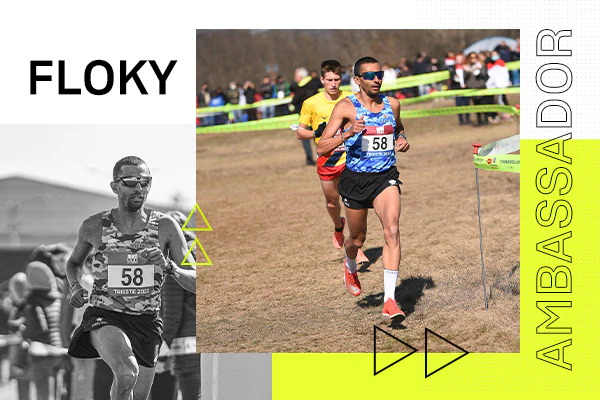
At the start, your whole life flashes before your eyes, a thousand doubts come to mind, but then you focus and think about finishing, no matter what. When you finish, whether it goes well or very well, you’re bound to be happy: it can’t go badly, completing 42 km can only make you happy. Running a marathon is almost like writing a book: when you set out, you have a blank page in your hand, and from there on, you write a story. Anything can happen, everything can go wonderfully, or everything can go terribly wrong. At the finish, sometimes you cry, but it’s because you’re nervous, because you release the tension of having held on until the end, you feel the satisfaction of not giving up despite the temptation to do so at every kilometer.
What would you say to someone who wants to get into this sport, even if they don’t have competitive aspirations?
I’d advise him to do things step by step. Everyone starts with the marathon because they have a romantic ideal. It would be good to go step by step: from 5 km to 10 km, then the half marathon, and only then the marathon. It’s important to get there well, gradually preparing the muscles. Running is something you do first and foremost to let off steam, to feel good: doing things step by step allows you to continue it for a long time. If you get injured, you risk carrying the damage with you for a long time. The advice is to prepare for a marathon in no less than a couple of years, with continuity in your physical activity.
What do you think is essential for a marathon runner’s training?
Nutrition is crucial, more so than the effort of training, because it’s our fuel. Another important thing is hydration: learning to train while trying to drink on the run. For a marathon runner, it’s one of the hardest things ever: every 5 km, grabbing a water bottle and drinking while training at a very high pace. It’s very tiring, sometimes you even feel retching. Never show up for a race without trying to drink while training at a high pace, because it can cause serious problems. And then rest. When you have this workload, if you lack sleep or don’t recover properly, it’s as if you’re not working. We often think that training is effective only if you arrive exhausted at the end, but everything else that goes into it matters.
What’s a common misconception about athletics that you know from experience isn’t entirely true?
Something I’ve often heard is that marathons should be run at a mature age. I disagree: professional athletes, if well-prepared, can run them even in their twenties. Relegating marathons to the end of their careers is limiting; they should be run right away to get used to the miles, especially if they’re slow at shorter distances. Which is the opposite of what I recommend for amateurs! Another common misconception is that marathon runners slow down. Nothing could be further from the truth! Those who run long miles learn to run them all and manage them well, avoiding slow miles: the result is that they run fast even at shorter distances. We’re seeing this in many professional athletes now that this taboo has been debunked, so much so that sometimes we veteran athletes wonder where we’d be if we’d started running longer distances early on.