Mauro Ciarrocchi
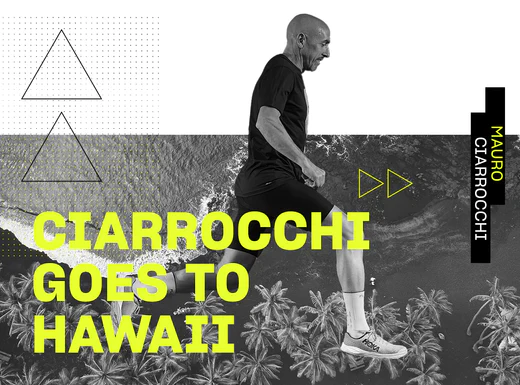
"The real start is very early": and advice from Mauro Ciarrocchi to face the triathlon and prepare for the Ironman
“When I started it, my dream was what I wanted to do in an Ironman”: così Mauro Ciarrocchi, triathlete and Ironman from Brescia, president of the Triathlon Brescia DTTRI and ambassador Floky, remembering the importance of the triathlon, almost trent’anni fa. A visceral passion, that for the combination of road, bike and racing, and an impossible dream: part of the champions of the Ironman world of Hawaii.
Oggi, we have done 42 Ironman, since 8 alle Hawaii (with no one in preparation for the next great thing!), the passion for this sport burns alive and well. Exclusively for the community, Floky will keep you safe and secure without being intimate with the triathlon and, however, you will start dreaming of conquering the Ironman qualification.
How have you seen the triathlon change?
When I started practicing triathlon, in 1993, all I knew was the length distance and the intimidation of the print. When the Olympic triathlon comes around, you are now aware of everything in the world, at the 2004 Atene Olympics, everything about the triathlon at its most complex is beginning to sow a little bit more accessible to you. Molto timore rimane anche oggi, ma – and I do not say it in a supponente way – chiunque è secondo me in degree quantomeno di affrontare a sprint or olympic distance. The big one is the fraction of the night, but the distance between the bike and the race is accessible to everyone.
What is your passion for triathlon?
I always love running, especially the marathon. The beauty of triathlon, which is also the reason why it is a great opportunity to carry this sport for so many years, is the combination of three diverse disciplines, which is a guarantee of variety. When I ran the marathon, there was a misfortune and it was not risky for me to run, my state of mind collapsed. Adesso nuoto o fordo en bici e riesco comunque a fare sport, che è quello di cui ho bisogno per stare bene. Non ho mai sentito il bisogno di fermarmi or di interrupte gli alenamenti, nonostante siano very pestanti. And here is the question of travel: I will turn the world to fare gare in a good mode of fare sport!
What sensation have you experienced there?
My cousin Ironman was in Germany in 2000. Un freddo pazzesco, la sera perfino pioggia, nonostante fosse luglio. Finita la gara ho detto a mia moglie: “Mai più”. La mattina dopo mi sono svegliato e avevo già Cambioto idea: “Però è stato bello”. In 2003, Zurigo ho fatto la gara che mi ha dato mia prima qualifica per i mondiali delle Hawaii. It was an incredible emotion, an impossible dream that had happened. Tant’è che mi sono detto: “Andata bene questa volta, ma non capiterà mai più”. And invece mai dire mai.
What is the moment of your sporting carrier that you are most impressed with?
I’ve done a lot of races, but I associate them more with the places they were held than with the races themselves. Hawaii is always Hawaii: I’ve been there eight times, this year will be the ninth, and for me they’ve all been beautiful, from the one with the best time to the one with the worst. It was also wonderful in Malaysia and Los Cabos, Mexico: those are places where I spent wonderful holidays after the race. And also the island of Elba, where they do the Ironman in Italy. I really like the Ironman distance, I could do it at home, in Brescia, but when you do those kilometers swimming in a Caribbean sea or running through exotic landscapes, the experience becomes even more memorable.
How does your daily training go?
I can afford to train a lot and at many different times. From Monday to Friday, I swim for about an hour in the morning, then bike or run on alternate days. Saturday is dedicated to a combination of bike and run, and Sunday is all bike. I don’t have a rest day, but there are days when the training is so light it’s like resting. It’s all based on my availability at that time: if I have injuries or impediments, I adjust the training. It’s maintenance training, so I don’t lose shape.
And what about preparing for a race?
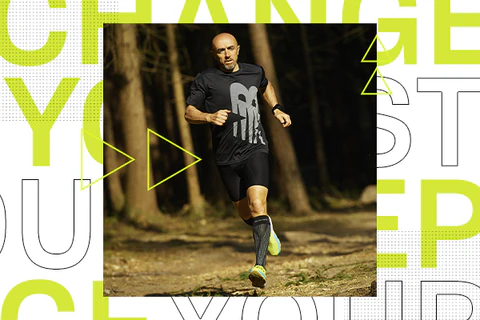
The three months leading up to the race are very intense, both in length and quality: I choose very demanding, combined workouts, which I mostly do alone and not with others. In the final month, the recovery month, I reduce the distances to conserve my strength. The Floky socks accompany me in all my training cycles and even in races. When I train long distances, I always use the Run Up Long, while for shorter distances and races, I use the Short. Since using the Floky, I’ve no longer had problems with blisters on my feet, which were a constant, especially at Ironman. My feet are always rested. One night I dreamed that I had arrived in Hawaii for the World Championships and had forgotten about my Floky: a nightmare! I’d really struggle not to use them now. They’re addictive!
What is your first thought when you start a race?
An Ironman starts around four in the morning, when the alarm goes off. If I’m lucky enough to have slept soundly, which never happened the first few times, I start the day calmly with a good breakfast. A quick trip to the transition area to check my bike, and then off we go. Before starting the swim leg in Hawaii, there’s a very special moment: you enter the water and stay submerged for about fifteen minutes, waiting for the gunshot. These are moments of intense tension, to the point that the gunshot feels like a true liberation. During the first few strokes, the thought is: “Why am I doing this?” Then the voice changes: “You’re here, and you’re doing it.” You think about everything you’ve done to get there, all the sacrifices, and you persevere. The race itself is nothing special: it’s everything that comes before that’s challenging.
What would you say to someone who wants to get into triathlon?
Taking up triathlon, even the shorter distances, is an experience I recommend to everyone. Swimming is a sport that provides great physical benefits, and in winter it’s an opportunity to get moving, as it can be done in warm places like pools. Running is a year-round way to stay fit, and can be done at any temperature if you’re properly dressed. This variety of disciplines, all aerobic, allows you to feel good and stay healthy. It’s obvious that it’s tiring, but if you practice it wisely, even training three or four times a week, triathlon is a sport that can be incredibly rewarding, even without any specific competitive ambitions.
And what about someone who wants to prepare for a race like the Ironman?
As an amateur, you should avoid chasing results at all costs. You need to accept the harsh truth that, in training, failing to achieve your goal is a daily occurrence. My advice is to build a solid base of work, with medium or even slow paces, to build momentum. Only then should you work on quality training to improve your performance. It’s very important to train alone often: the Ironman is a solitary race; it doesn’t take much to get bored and lose your rhythm, or even suffer a mental breakdown. It’s also important to train gradually: approaching the Ironman distances without actually doing them. And, ultimately, approaching the race calmly.
Have you ever been tempted to give up everything and hang up your shoes?
I’ve never thought about giving up. I love this sport, I love this distance, I love training (even more than competing!). My wife and I have found a balance: I play sports and compete, and then together we enjoy wonderful vacations in the wonderful places where the races are held: Hawaii, Malaysia, Mexico. Continuing to train and compete doesn’t weigh me down at all; in fact, I’d have a hard time thinking about not doing it. I might not be able to compete in Hawaii when I’m eighty, but I hope to hold on as long as possible.